Garage Door Replacement Guide
Replacing a garage door can improve your property’s safety, appearance, and daily use. A new door may also provide better insulation, quieter movement, and stronger protection against severe weather.
There are many materials, designs, and features to compare before making a decision. This guide explains when replacement may be necessary and what to consider when selecting a new garage door.
Garage Door Size

Choosing the correct garage door size is the first step in a successful garage door replacement. Although many homes have standard single-car or double-car doors, the opening may not match today’s standard dimensions. This is common in older homes, renovated garages, and custom properties.
A professional should measure the opening’s width and height, as well as the available space above, beside, and behind it. These measurements determine the door size, track configuration, spring system, and garage door opener placement. Accurate sizing helps the new door move smoothly, close evenly, and create a better seal against rain, wind, and outside air.
Garage Door Materials
The garage door material affects the door’s strength, maintenance, appearance, and price. It should complement the property’s design while also holding up against the local climate.
- Steel garage doors are strong, versatile, and available in many colors, textures, and insulation levels.
- Aluminum garage doors are lightweight and resistant to rust, making them suitable for modern properties and humid areas.
- Wood garage doors provide a natural, high-end appearance but usually require more maintenance.
- Composite garage doors offer a wood-like look with greater resistance to moisture and changing weather.
- Vinyl garage doors resist corrosion, moisture, and many minor dents, making them practical for coastal conditions.
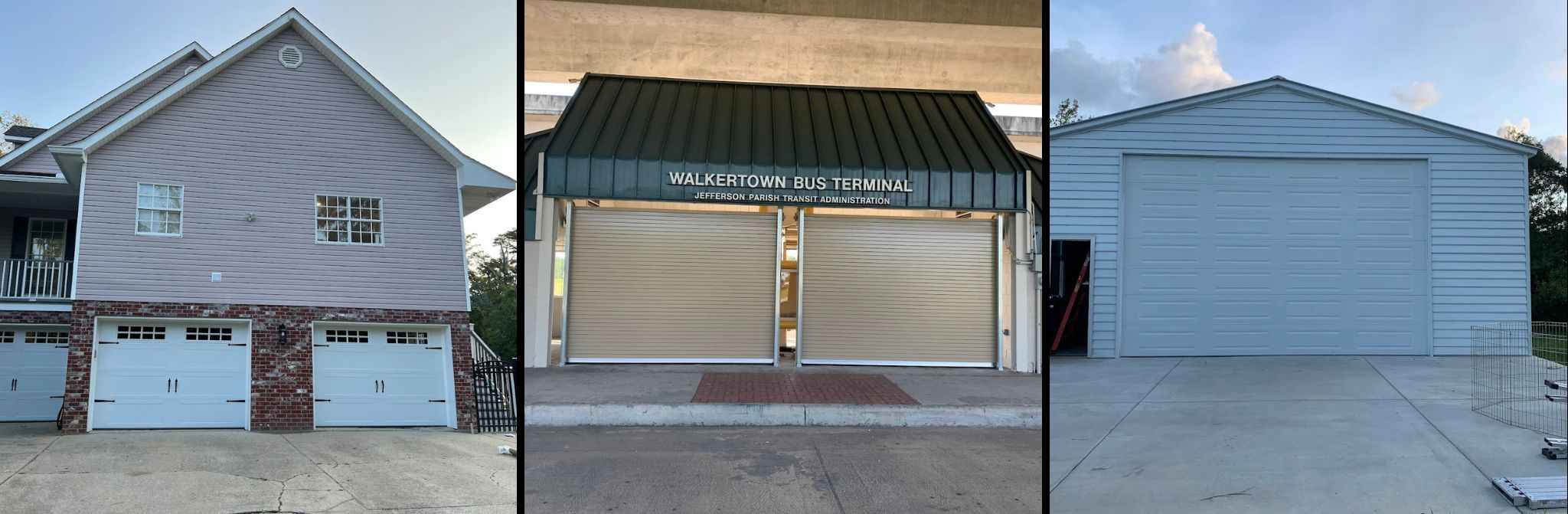
Homeowners in Louisiana and Mississippi should consider heat, humidity, rain, and storms when comparing garage door materials. Maintenance requirements and expected lifespan should also be part of the decision.
Door Construction and Insulation
Garage doors are commonly available in single-layer, double-layer, and triple-layer construction. A single-layer door has one exterior panel and is usually the most affordable option. A double-layer door adds insulation behind the exterior panel. A triple-layer door places insulation between exterior and interior layers, creating a stronger, quieter, and more finished structure.
An insulated garage door can help reduce heat transfer and improve comfort in an attached garage. It can also add strength to the panels and reduce noise during operation. This may be valuable when the garage is used as a workshop, gym, storage space, or main entrance to the home.
Insulation performance is often shown through an R-value. A higher R-value generally provides greater resistance to heat transfer. Weather seals around the door are also important because gaps can allow heat, rain, and outside air to enter.
Hurricane and Wind Ratings
A hurricane-rated garage door is designed to handle stronger wind pressure than a standard door. It may include reinforced panels, stronger tracks, heavy-duty brackets, and additional supports.
The required wind rating depends on the property’s location and local building codes. Some areas may also require impact-resistant features or specific product approvals. A door should be selected according to the exact requirements for the property rather than by appearance alone.
Proper garage door installation is essential. A wind-rated door must be installed with the correct tracks, hardware, fasteners, and supports to provide the protection stated by the manufacturer. ACE Garage Door can help customers compare hurricane-rated garage doors suitable for Louisiana and the Mississippi Gulf Coast.
Budget and Warranty
The price of a replacement garage door depends on its size, material, construction, insulation, wind rating, and design. Windows, decorative hardware, custom finishes, and a new garage door opener can also affect the total cost.
Compare complete garage door systems instead of looking only at the price of the panels. A quote should explain whether it includes tracks, springs, cables, hardware, professional installation, removal of the old door, and permits when required.
Garage door warranty coverage may vary between the door sections, finish, hardware, springs, opener, and installation. Review what is covered, how long the protection lasts, and whether maintenance is required to keep the warranty valid. A well-built door with dependable warranty coverage may provide greater long-term value than the least expensive option.